
One of the most underrated life skills

provePerforming well when you don’t feel great
“One of the most underrated skills in life is performing well even when you don’t feel your best. Optimisation culture makes us fragile. Not every negative feeling needs to be fixed. Not every night of sleep needs to be perfect. You can show up and get the job done anyways” - Brad Stulberg, author and speaker
It's always easy to do our best work, when everything is ticking along nicely in our life.
To be able to deliver, even when it’s not, is where real success lies.
Few people have developed this kind of inner muscle - the ability to get great work out of our not-so-great days.
Can we feel like crap, and still perform well?
What seems to have become common place in our culture is people thinking they need to get rid of, or ‘fix’ a feeling state before they can act in a desired direction. Of course suppressing or ignoring our emotions is not very helpful all the time. If there’s something we can do, to feel better, of course, the right next action is to do it.
But the truth is, we can feel like crap and still perform well. In fact, often it’s the act of getting started that shifts how we feel. To have an inner wise and encouraging voice that sounds something like “OK, this might be a bit of a tough day, but I know I can handle this.” This type of inner strength only comes with practice.
Ironically, with this approach, we are also more likely to better manage things as they unfold.
Catastrophising
We have all done this at some point in our life dramatised things…because it all feels too much. Not getting enough sleep before a big exam, starting a long walking track with a old injury, or in my situation. Too often we spiral because we feel off.
However, the problem isn’t always the fact that we ‘feel off’. The problem is more likely the stressing out about the feeling of being ‘off’.
Take a moment to consider that human beings are designed to withstand uncomfortable and difficult situations – and to grow and evolve and get stronger through it. It’s possible to feel bone tired, stressed, to feel like you are ‘below parr’ and not good enough…. and still deliver.
We are capable of putting those not-so-great feelings in support actor’s role – rather than them being the star of show. They can be there throughout the show, but you are the what’s in charge of the show. You are the main act.
The trap of clinging to certainty and perfectionism
Stulberg emphasises, that if we require everything to go a certain way, we make ourselves fragile, because when things don’t go that certain way, we freak out. We can do everything we can to set ourselves up for success – we can nail our habits and systems – but we also need to develop our inner muscle of believing we can work things out as we go along.
True inner strength is a sense of ‘backing ourselves and knowing that we have got enough within us to still show up, and give what we’ve got, in the moment, under any circumstances.
Stulberg writes: “The golfer JJ Spaun was up at 3am with a vomiting child. The next day he won the US Open. The greats aren’t great because they always have perfect conditions to do meaningful work. They are great because they show up and give their best shot even when they don’t.”
The trap of Optimisation
Today’s optimisation culture is a bit of trap, because its basically encouraging us to cling to perfection, and to try and control everything. It’s worth asking ourselves , “do these bio-hacks and performance gimmicks tools really work?”
The problem with the popular Instagram worthy tips and tricks, is that its about optimisation…and this approach will always fail, because the nature of life is not something we can always control. In fact, the nature of life is uncertainty. So trying to control everything is really, a futile way of living. It only perpetuates anxiety about the inevitable uncertainties around the corner.
A better approach to achieving our best performance, therefore is to be OK with not knowing. To be OK with the uncertainty of life. This is also the path to more freedom, and a greater more fulling life.
Build self-efficacy
The well researched psychological term ‘self-efficacy’ is a belief that we are capable of showing up, working through challenges, and even capable of excelling in uncertainty or highly charged circumstances.
The evidence base[1] on self-efficacy has found:
Individuals who score high in self-efficacy are better able to work through situations when they feel lost or stuck, whether it be in the operating room, on the playing field, or in the workplace boardroom.
If someone is insecure about their process and abilities, then they are liable to catastrophise when the path forward is unclear or when things feel off. But if someone is secure about their process and abilities, (if you have evidence to lean on), then they are more likely to stay unfrazzled.
The best way to gain self-efficacy, the research shows, is through experience.
One of the best things we can do for our confidence
...is to feel off and still perform well.
So the next time we might be faced with suboptimal conditions, we can remind ourself that we don't need to feel great to perform well.
Instead, reframe it as a chance to build self-efficacy. Squash the panic. Transform the catastrophizing. Say things like “Okay, this might test me a little, but I think I can handle this.”
Just get on and do what you need to do, as best you can.
When we do this enough times over - we prove to ourselves, and provide ourselves with the evidence that we are more resilient than we think, and that we are capable, and pretty robust, and can get a professional job done. It builds our confidence so we start to feel like we can do more of it. Interestingly, it also frees us from the need to have perfect conditions to give it a go.
As Stulberg nicely puts it, “These reps are every bit as important as the ones where everything is clicking. Perhaps even more so.”
A Practice. Putting this into action now
Next time you are faced with undesirable or suboptimal conditions remind yourself that:
You don’t need to feel great to perform well (if you truly can’t get the job done – you are very unwell or have a war breaking out around you – then of course we need to have the wisdom to bow out).
Remove your tendency to control everything. Try not to add to the stress by trying to control everything or create the perfect conditions when that’s not possible.
Reframe your situation. Use it as a chance to build self-efficacy. Say things like “Okay, this might test me a little, but I think I can handle this this”. This will squash the panic and catastrophizing. Show up and do what you need to do, as best you can.
*I was inspired to write this blog after reading One of the Most Underrated Life Skills: Performing Well When You Don't Feel Your Best, By Brad Stulberg
Reference: [1] Bandura 1977.pdf
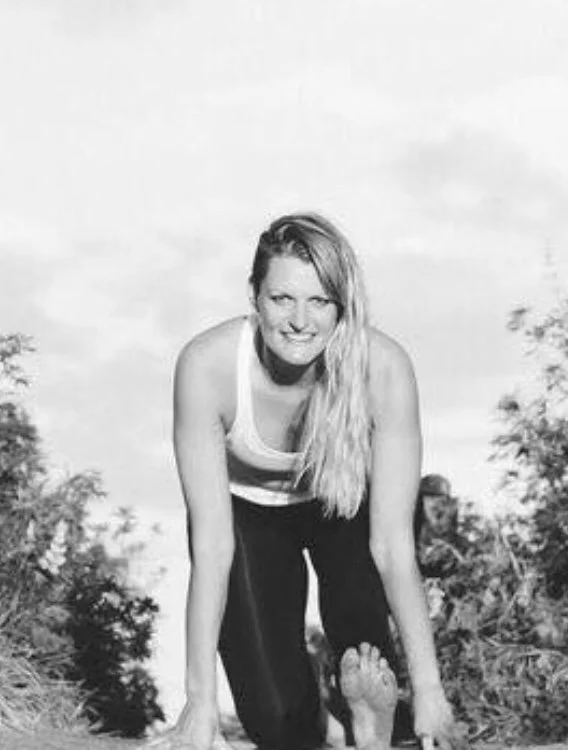
About Jo Jarden
Jo Jarden is a personal trainer, yoga teacher, and the founder of Heart and Mind Yoga studio 54 Holmwood Road, Merivale, Christchurch.
Book a private yoga session at 54 Holmwood Rd, Merivale
Book a workplace yoga session with Jo
She has 12 year's experience as personal trainer, yoga teacher, and workshop facilitator including working with:
Business executives
Gyms, group yoga & fitness classes
Farmers and rural settings
Workplace retreats, events, and conferences
Her approach combines both body and mind practices to help people boost their health and general feelings of positivity. She utilises the combination of ancient yoga wisdom and wellbeing science techniques to help people release tension and grow their inner strengths.
Qualifications include:
Certified Yoga Teacher Santosha Yoga Institute, Registered Australian Yoga Alliance 2017
Certificate in Advanced Personal Training, Fit College New Zealand, 2016
Bachelor of Science with Honours Public Health. University of Canterbury, New Zealand 2006
Bachelor of Arts Mass Communication and Psychology. University of Canterbury, New Zealand 2005
Contact: jo@heartandmindyoga.co.nz, 022 125 3011.