
Wait. I’m the problem here?
HOW THE CULTURE FRAMES MENTAL HEALTH IN THE NEGATIVE, MAKING US THINK LIKE A VICTIM
Believing mental health is a liability rather than a resource
Most people think ‘mental health’ is about addressing painful and difficult psychological states. Currently people are mainly encouraged to engage in mental health discussions through negative stories.
Therefore there is a common belief that our mental health is a liability not a resource i.e., a problem to be fixed, not a potential to be grown.
Even though aspects of our mental health can cause us emotional pain and difficulty at times, it’s important to remember our mental health is a resource, not a liability. In fact it is the greatest resource we have as it underpins all our thoughts, emotional, decisions, relationships and our sense of meaning in our life.
Good mental health is not just getting back to coping well with the grind in our socially defined roles. This is the outdated disease/machine-based model of mental health, where it was thought if you just deal with the mental health problem, usually through the medical system, then the mind will automatically run optimally.
We now need a more vibrant positive proactive approach to living life.
Labelling and medicating our normal growing pains
Part of evolving consciously as a human being, means we will experience growing pains, otherwise known as emotional discomfort. These days, what seems to be the trend, is that when things get hard, people blame their struggles on their mental health issues, as if that gets them off the hook, or that its now someone else’s problem. Even if we do want to be proactive, we want the quick fix without having to go through the growing pains, which are a necessary part of anything that grows.
It’s interesting (and alarming) that in 2026 we are ‘so advanced’ in our approaches to health that we medicate our growing pains. We medicate because the shame of telling the truth is too excruciating to bear. We think “if I just take this pill it will transform me into the person I want to be without having to do the painful work of actually becoming that person.”
Succumbing to the incentives of the system that wants you to stay the victim, rather than become an accountable agent of your life
Isn’t the goal to get well, not stay unwell?
The disease model of mental health frames our struggles as disorders rather than doorways. For example:
There is no interest in our divine nature, and our unique potential.
Emotional pain is seen as something to avoid at all costs rather than to learn from.
Behaviours are seen as happening ‘to us’ not ‘through us.’
The system seems to celebrate a person ‘accepting their diagnosis’, and never acknowledges the possibility to transcend it.
Even the words mental health have become a euphemism for mental ill health. So there is either poor mental health, or no mental health. There is no place for being mentally healthy in this thinking.
People think having a diagnosis of a mental illness is an explanation for their experience of psychological pain or confusion. But a diagnosis does not, and was never meant to, provide an explanation of who you are. It is just a cluster of different behaviours and feelings listed in a book (the DSM – The Diagnostic and Statistical Manual of Mental Disorders). Depending on what these are, they will match with one the many hundreds of labels. The label is mainly to help facilitate communication among healthcare providers. We are not a label.
Labelling keeps people stuck in an alternative reality where they are always the victim of something outside them. It’s not healing at all, and it must be harming people.
“Biological explanations for mental health problems sometimes can entrench symptoms” – Dr Suzanne O’Sullivan, clinical neurophysiologist and neurologist & author of the Sunday Times Best Seller ‘The Age of Diagnosis.’
Celebrating diagnoses
Not only have we normalized being labelled as mentality ill, but we are also now celebrating and glamorising it with ‘mental health ‘jargon. On social media platforms, people report that ‘autism is my superpower.’ We now have celebrities doing it – splurging their vulnerability story and getting rewarded and celebrated for their dysfunction. The more they reinforce it, the more rewards they get - so it’s a cycle. It encourages other people to live as their label, rather than their true self.
When the convenient labelling and victim mentality goes unchallenged in this way, it grows like cancer in the culture. The victim mindset expands, the diagnosis option becomes normalised (and even glamourised). As a result, what we see now see is parents feeling relieved with their children’s diagnosis. They think it’s an explanation, but the explanation is always founded in some deeper misalignment with our true selves.
To find the root cause, takes self-inquiry, deep work and examination of interpersonal, family and cultural dynamics. Sounds like hard work…and it is. But it’s also rewarding work. However it’s much easier to anaesthetise ourselves with more scrolling, celebrity worshiping and busyness.
FROM VICTIMHOOD, TO BEING RESPONSE-ABLE
Our victim stories could be keeping us sick?
Being response-able means you recognise true health means being well mentally, physically, and spiritually. It’s realising you are not a random assembly of cells separate from the natural world - you are part of it, and you already possess everything you need for healing and health.
We have an allergy to taking responsibility for our lives. We are magnetically drawn to victimhood and avoid personal agency.
We tend to avoid asking ourselves solutions-based question like, ‘What strength from within is trying to emerge because I’m struggling to fit it?’ Maybe all you need is to redesign your life a bit, to align with your unique quirks? But this takes inner strength such as grit, courage, and going against the grain. Maybe your brain chemistry is all working perfectly because the pain is trying to tell you something about growing, changing, and evolving into a new version of you?
Most people avoid this path, simply because it’s hard, and playing the victim is easier.
“Most people do not really want freedom, because freedom involves responsibility, and most people are frightened of responsibility” - Sigmund Freud, Austrian neurologist
The antidote to mental illness is already within
It is more realistic, and in line with current science, to reframe our mental health from a liability that we label, to our greatest resource.
Understanding the power of this inner resource is going to be increasingly essential as the world becomes more psychologically demanding, with accelerating change, complexity, and uncertainty. The 'broken machine' model of psychological pain may have worked somewhat, when the world wasn't so rapidly changing, uncertain and complex as today. We now need a more vibrant positive, proactive and non-medicalised approach.
To help us with this - growth in neuroscience, consciousness research, and other related disciplines, has been phenomenal in the last decade. It is giving quite a different picture to the traditional mental health ideas that we’ve been sold through the medical approach and mental health advocacy organisations. We now have a much richer and expansive set of ideas on how the brain and mind relates to who we are and how we live.
The real issue here – disconnection from our true essence
The root of all human suffering isn’t a chemical imbalance, it’s our disconnection from each other and from our own true essence.
Call it your true nature, your soul, divinity, your sovereign self, your deeper self – whatever helps you realise that you are more than just a heap of cells that can be well or unwell. When we are disconnected from our sacredness and humanness by simple biological machine explanations of ‘mental health’, we end up spiritually dehydrated. We become isolated, medicated, and the victim who is forever dependent on systems that profit from our separation.
If we consider the fact that human beings are resilient and grow through challenge and difficulty, it starts to turn this all on its head, so to speak. Accepting a message that we are strangers to ourselves and that we always need an expert to find and fix our ‘brokenness’ seems to disrespect the truth of our limitless potential.
Healing is possible when we choose to take responsibility
Perhaps your ‘mental health struggles’ are in fact just the stepping stone to you finding your true strength of character?
Maybe your depression isn’t a disease? Could it in fact be your souls rebellion against a culture that has forgotten how to nourish the human spirit?
Perhaps your anxiety isn’t really a disorder? Maybe it’s your nervous systems intelligent response to an unhealthy world where authenticity is no longer commonplace?
Could you consider that this inner turmoil maybe natural, and its in fact the deepest part of you – the real part of you – that’s refusing to adapt to a sick system?
“When we are no longer able to change a situation, we are challenged to change ourselves” - Viktor Frankl, Austrian neurologist, psychiatrist, philosopher, and Holocaust survivor
wORK WITH JO
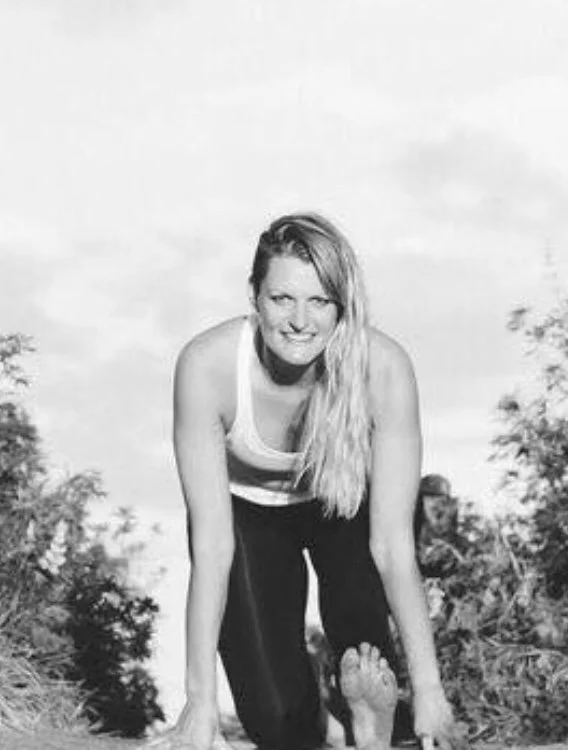
Private Yoga Sessions at 54 Holmwood Rd. For 1 person, or 2 people.
Workplace yoga - at your workplace or a venue nearby
Conference and events - Facilitator/speaker.
jo@heartandmindyoga.co.nz, 022 125 3011.
Jo Jarden is a personal trainer, yoga teacher, and the founder of Heart and Mind Yoga studio 54 Holmwood Road, Merivale, Christchurch. She has 12 year's experience as personal trainer, yoga teacher, and workshop facilitator including working with:
Business executives
Gyms, group yoga & fitness classes
Farmers and rural settings
Workplace retreats, events, and conferences
Her approach combines both body and mind practices to help people boost their health and general feelings of positivity. She utilises the combination of ancient yoga wisdom and wellbeing science techniques to help people release tension and grow their inner strengths.
Qualifications include:
Certified Yoga Teacher Santosha Yoga Institute, Registered Australian Yoga Alliance 2017
Certificate in Advanced Personal Training, Fit College New Zealand, 2016
Bachelor of Science with Honours Public Health. University of Canterbury, New Zealand 2006
Bachelor of Arts Mass Communication and Psychology. University of Canterbury, New Zealand 2005