
When things are not bad enough
“Often, we fail to improve our lives simply because things don't get bad enough. If your new job is hell, you’ll leave it, but if it’s just unsatisfying, you’ll likely grind it out. Thus, small problems often threaten our quality of life more than big ones” – Gurwinder Bhogal
This quote from Gurwinder sums up how most of us are living: we are stuck, and feel unfulfilled, because we live in a world where masking, and medicating, and distracting ourselves from our inner turmoil and discontentment has become the norm. Life has become so comfortable, and so ‘advanced’ we now don’t need to feel the necessary ‘growing pains’ that human beings need to evolve consciously, and in a healthy way.
The whole way our consumerist culture is set up, is to tell us this comfortable life is the ‘good life.’ But is it really?
We mistake comfort for happiness
“Our idea of happiness may be the very thing that’s preventing us from being happy” – Thich Nhat Hanh.
For most of us, we tend to confuse the comfortable life as the way to happiness. When in fact, what really brings lasting fulfilment is a meaningful life, that’s not always comfortable.
Research has found that it’s better to seek meaning over the comfortable happy life. The comfortable happy life is good for a while, but soon enough those pleasures begin to feel dull, pain and dissatisfaction resurface. In contrast, the meaningful life still has struggle and setbacks, but we experience the deeper positive emotions, such as joy and contentment from contributing to something greater than just ourselves.
The truth is, meaning will not come from the job you do just for money or status, nor will it come getting more of anything – more wealth fancier technology, or more comfort. Often, it’s only when things really break down, that we are willing to go deeper.
Some of the ways I’ve noticed people stay ‘stuck’ in their life, because they seek comfort over meaning, include:
In their relationships - it’s too good to leave, and too bad to stay. Often, we stay trapped in dysfunctional relationships, because we haven’t got the courage to front up to both our own discontent, and we don’t want to have the necessary but painful honest conversations that lead to a more honest and fulfilling life in the end.
In their job – you might have a career that you think that gives you meaning. You have been climbing the corporate ladder, doing what’s expected of you, and you might arrive at a point where perhaps your job is not needed due to the ‘advances in AI’. Maybe realise your career doesn’t mean anything anymore. You ask, ‘Who am I,’ and ‘Am I even significant without this job?’ ‘How will I survive without the big income?’
They seek comfort over challenge - compared with any time in history we have more riches, comfort, and convenience our ancestors could hardly dream of. Our culture tells us success means more, so we seek more comfort, more wealth, more of everything. But research tells us we are more mentally and physically unwell than ever before. Is ‘more’ really the answer?
It’s comfortable, but is it fulfilling?
Most of us like the idea of freedom, but we don’t want to leave the comfort of our old ways. Joesph Campbell emphasises that ‘we shouldn’t do what Daddy say’s – referring to the idea that if we bargain away our life for security, we will never find our bliss. Most people like the idea of freedom and living courageously, but they don’t take steps in those directions, because it’s scary.
Some of the most common fears people have include:
The fear of being emotionally and physically uncomfortable
The fear of uncertainty
The fear of being lonely
The fear of being laughed at or failing
The fear of disappointing the parental voices in our head
Most of us want a better life for ourselves but we don’t take action because we think we can’t do it, or that it won’t work out. We tend to catch up with friends to talk things over and sooth out our anxieties and dissatisfaction with our life. Or we gloss things over and sugar-coat things and post pretty pictures on Instagram to make our life seem better than it really is. We talk about other people’s faults, while not actually taking action ourselves.
The path to true fulfilment means we choose to walk toward fear, instead of organising the rest of life around avoiding it.
Often, it’s only when things really break down, that we are willing to look honestly at our life, and how we have been living up until this point.
Perhaps the crisis is the exact opening where the light gets in?
Discomfort isn’t an obstacle to happiness, it’s the path to it
It’s only by enduring struggles that we develop the resilience necessary for lasting contentment. In our modern world, suffering or struggle is seen as diminishing. In ancient times, struggle was seen as a catalyst for growth. Today, we seem to be so quick to medicate and label struggles as ‘mental health issues and disorders, rather than ask ourselves ‘what is this trying to teach me?’ Our struggles can be a good opportunity to look a little deeper at your life and get curious about what you are really here on earth for.
We think suffering is unfavourable – but the path to true fulfilment in life is to ask, ‘what is its deeper purpose?’
‘Easy’ has a cost
Are we misunderstanding what it means to have true wellbeing?
The essence of true wellbeing is actually about our capacity to endure difficulties. If we are continually trying to make our lives easier, and more pain free, we never take risks and step out of our comfort zone. In fact, we actually become more fearful and restricted and unhappy when we avoid discomfort and choose security over living out our dreams.
"Strangely, life gets harder when you try to make it easy.
- Exercising might be hard, but never moving makes life harder.
- Mastering your craft is hard, but having no skills is harder.
- Uncomfortable conversations are hard, but avoiding every conflict is harder.
Easy has a cost." – James Clear
We used to have different stories about fear
We’ve created a culture so afraid of fear, we are now do anything possible to avoid it. And it makes things worse not better.
Fear used to be seen as a normal and essential part of growing up from a child to and adult. Looking back thousands of years, many ancient cultures all over the world had initiation rituals that was part of a normal process of the transition from childhood to adulthood. The intent of initiation rituals was for the adolescent be confronted with some form of adversity, and to go through the difficulty and the pain and to be able to survive.
The worst thing for any human being would be to be prevented from encountering adversity throughout childhood into adolescents. This path creates a self-centred human being – a very low-level functioning human being, lacking the fundamental qualities adulthood requires, such as dealing with adversity, and dealing with the discomfort of difficult emotions and knowing how to regulate themselves in a healthy way.
Interestingly, the very fact that a person has never encountered much adversity, becomes this person’s greatest form of adversity.
An evolutionary principle: life has to be difficult for evolution to happen
Just like a blade of grass or a flower trying to grow, there’s an evolutionary principle that operates everywhere and on every level: Life has to become difficult in order for evolution to happen.
If you think about wanting to grow a stronger body, most might go to gym.
You lift weights to make life difficult for your body. In doing so you are creating adversity for your body.
When the body experiences lifting weights as a form of adversity, the body starts to make a demand for more energy in order to cope with arising difficulty.
Overtime, the body becomes more conditioned to this added need for energy and it becomes stronger. This added energy then strengthens the body.
The added energy would never have come if there had not been a demand for energy, because life was getting difficult for the body.
The same is true for our collective consciousness as a society. In most cases humans awaken spiritually through suffering, which is encountering adversity, not from sitting on the couch scrolling.
In this time of struggle, what quality would need to emerge from within?
One of my spiritual guides, Michael Beckwith once said that “even in the most difficult times in our life, it is possible to use this experience of challenge as a process for personal growth.” In fact he says it’s often the best time - when everything feels like its pressing against us, because the only way to overcome that situation is to go within.
Beckwith explains that in these moments we can ask ourselves, “If this experience were to last forever, what quality would have to emerge for me to have peace of mind?”
Usually, I find, that when I sit with this, I’m going to need a strength of some sort. When our attention starts to focus more in the quality, rather than resisting the difficulties, we start to feel better.
BOOK A SESSION WITH JO
Jo Jarden is a personal trainer, yoga teacher, and the founder of Heart and Mind Yoga studio 54 Holmwood Road, Merivale, Christchurch.
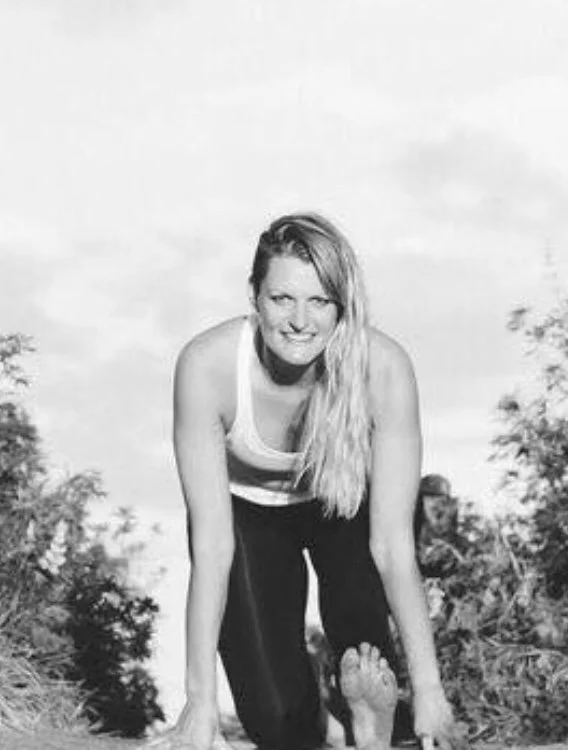
She has 12 year's experience as personal trainer, yoga teacher, and workshop facilitator including working with:
Business executives
Gyms, group yoga & fitness classes
Farmers and rural settings
Workplace retreats, events, and conferences
Her approach combines both body and mind practices to help people boost their health and general feelings of positivity. She utilises the combination of ancient yoga wisdom and wellbeing science techniques to help people release tension and grow their inner strengths.
Qualifications include:
Certified Yoga Teacher Santosha Yoga Institute, Registered Australian Yoga Alliance 2017
Certificate in Advanced Personal Training, Fit College New Zealand, 2016
Bachelor of Science with Honours Public Health. University of Canterbury, New Zealand 2006
Bachelor of Arts Mass Communication and Psychology. University of Canterbury, New Zealand 2005
Contact: jo@heartandmindyoga.co.nz, 022 125 3011.